Upstox Originals
Why can’t MSMEs escape the credit crunch?
6 min read | Updated on December 04, 2025, 18:18 IST


SUMMARY
Would it surprise you to learn that after an almost ₹40 lakh-crore lending boom, MSME’s still face a credit crunch of ~₹30 lakh crore, up from the earlier ₹19–22 lakh crore range. As lenders are getting pickier, many MSMEs are still outside the formal net. Follow the trail, and you’ll see exactly how the market is shifting, and that’s the whole story.
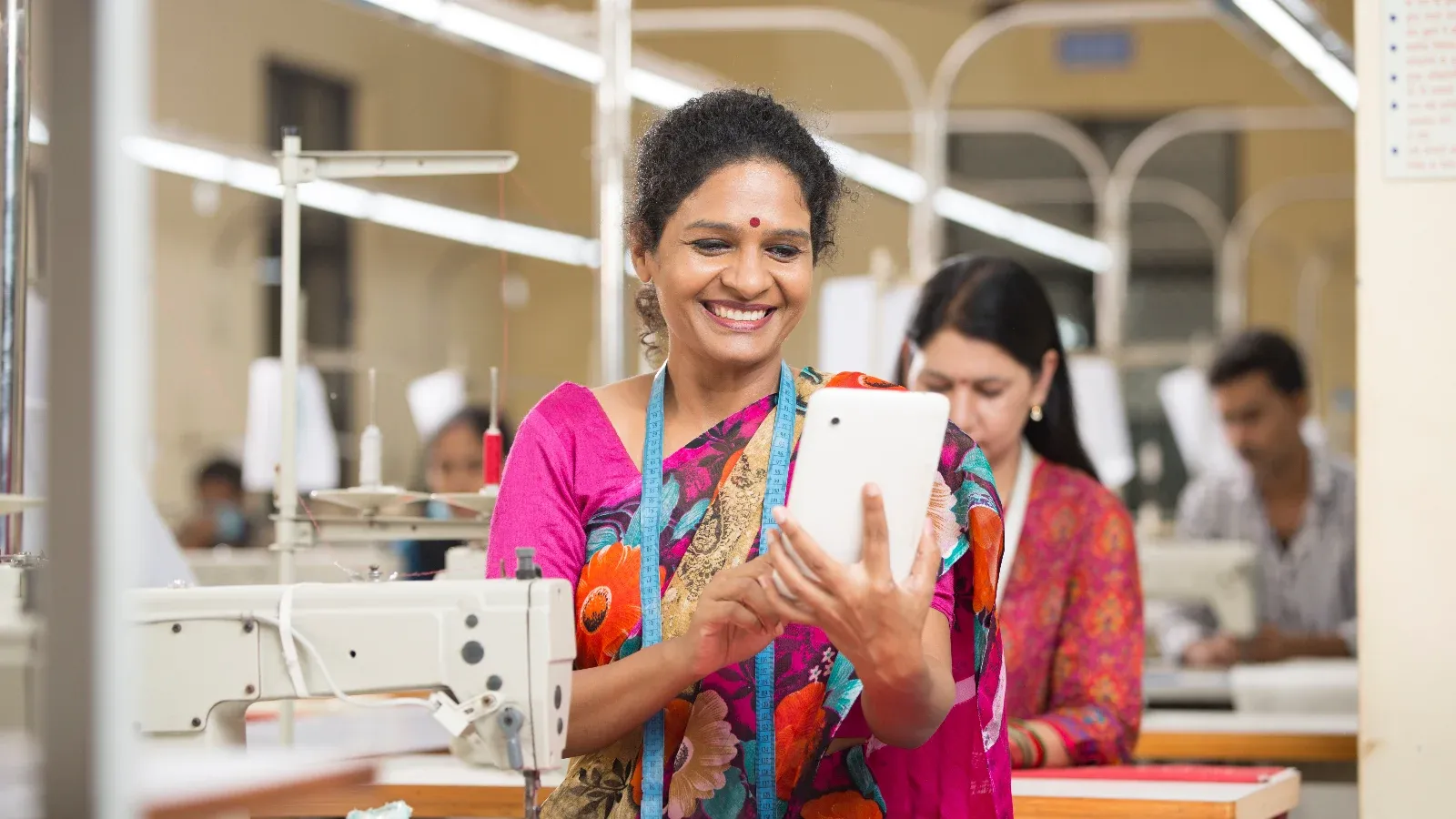
MSMEs drive 45% of India’s exports and keep over 11 crore people employed
If you take a quick look at India, MSMEs are everywhere.
-
They make up ~30% of the economy, drive 45% of India’s exports, and keep over 11 crore people employed.
-
MSME loans now account for nearly 17–18% of total bank credit
-
By March 2025, outstanding MSME credit surged past ₹35.2 lakh crore (the highest ever recorded)
-
In FY25, MSME lending grew by up to 20% YoY
MSMEs were borrowing to restock inventories, upgrade machinery, hire workers, and expand into new markets.
Despite this meteoric rise in MSME lending, SIDBI’s (Small Industries Development Bank of India), 2025 sector analysis estimates that India still has an MSME credit shortfall of nearly ₹30 lakh crore. In other words, a massive chunk of viable demand seems to be going unmet.
Why is there a credit crunch?
NBFCs are hitting the brakes
NBFCs, which had been a crucial shock absorber for MSME credit, are now pulling back, especially from unsecured loans. After a spike in delinquencies, major players have slowed their unsecured MSME lending through the September quarter, signalling a clear shift: more collateral, tighter underwriting, and larger buffers for potential losses.
Take Bajaj Finance. Its MSME gross NPAs jumped to 2.47% in Q2 FY26 (from 1.83% just a quarter earlier), prompting the lender to trim its growth outlook for the segment to 11–12%, nearly half of what it had projected earlier (20%).
IIFL Finance is telling a similar story. Its MSME non performing assets (NPAs) climbed to 5.93% in Q2, and the loan book shrank sequentially as the company pivoted sharply toward secured lending. The management has openly said it’s being “very cautious” on MSMEs and microfinance, focusing instead on recovery and collections.
And these are just some examples.
And it’s not just individual lenders hitting the brakes. Crisil has warned of a broader cyclical rise in MSME stress, particularly among export-focused borrowers reeling from the steep 50% US tariff on Indian goods.
This is also supported by recent on-ground anecdotes:
-
A cold-storage owner in Jalgaon had to delay his seasonal procurement because his bank asked him to “wait till next quarter” for a routine working capital line.
-
A hosiery manufacturer in Ludhiana is now delaying salaries because her enhancement is stuck in internal committee reviews.
-
In Odisha, a women-run handicrafts enterprise had orders in hand but still can’t get invoice discounting since their turnover is “too low for the branch’s focus.”
-
In Bhopal, a solar-panel installer, turned away by three banks, wonders, “If I was a risk last year and I’ve grown 30%, how am I still a risk today?”
Informality & weak credit files
Many micro enterprises still operate with incomplete GST data and informal bookkeeping. Reports note that 12% of micro firms rely on informal borrowing, and under-documentation keeps them outside mainstream lending.
Working-capital gaps from payment delays
MSMEs often get paid late, and that creates cash shortages. Even healthy businesses need short-term loans to keep things running. But when their GST returns or invoice records aren’t consistent, lenders get uncomfortable and hold back. So the cash-flow stress continues.
Borrowing costs remain high
ICRIER’s survey shows effective MSME loan rates at ~12.27% on average; 12.53% for micro firms and ~11.59% for medium firms. The spread over repo and prime lending rates remains large.
What are the consequences for borrowers and lenders?
-
Higher cost of credit for the small: MSMEs often pay much more for loans, the average rate is around 12.27%. And as NBFCs tighten their lending, smaller or weaker MSMEs end up facing even higher rates, or worse, are pushed towards informal lenders (who charge far more and offer no protection). This eats into their already thin margins and makes it harder for micro businesses to grow or scale.
-
Credit rationing in the thin-file segment: Many MSMEs don’t have clean GST records or strong bank statements, the “thin-file” segment (businesses with very little formal data). Because of this, they face credit rationing (lenders deliberately limit how much they’ll lend, even if the business is creditworthy). So, despite running healthy operations, these firms still struggle to access formal loans and often end up with smaller, costlier NBFCs or informal lenders.
-
Investment and employment drag: An unresolved credit gap inhibits capex and working-capital cycles, which has multiplier effects on employment and rural/urban livelihoods.
Can fintechs help?
By changing the very lens through which MSMEs are evaluated, maybe they can.
Instead of asking for collateral, fintechs ask a simpler question; How healthy is your business today?
They don’t wait for collateral or audited statements, they piece together AI-driven cash-flow models, GST data, payment trails, and alternative signals to judge a business in minutes, not weeks. Some can even map a firm’s next 90 days of cash flows, giving MSMEs clearer visibility and faster access to credit. Easy Pay’s Credit AI Engine does exactly this, scoring merchants even when traditional credit files say nothing.
And across the ecosystem, each player is plugging a different gap; Biz2X powers banks with a fully digital lending stack, Lendingkart analyses 5,000+ data points to disburse working-capital loans within 72 hours, Indifi builds sector-specific credit products using platform data from Amazon and Zomato, FlexiLoans offers fast unsecured loans through a fully online journey, and KredX turns unpaid invoices into instant liquidity through tech-enabled discounting.
What policy levers and market fixes can actually move the needle?
-
Broader adoption of digital records (GST/e-invoicing): The more MSMEs bring invoicing and bank transactions on-chain, the easier it becomes for risk models to underwrite. Government data initiatives and expanded e-invoicing thresholds help, but enforcement and adoption gaps remain.
-
Targeted credit guarantees and blended finance: Guarantee schemes (PSB/NBFC co-lending, CGTMSE-like mechanisms) can reduce first-loss concerns for lenders on thin-file borrowers, enabling more inclusive lending at affordable rates. SIDBI and other development finance institutions are central to such efforts.
-
Promote receivables-financing pipelines: Strengthening supply-chain finance, invoice-discounting and quick settlement can shrink working-capital demand and default probability.
Before you go
MSME lending is expanding, but the gap between confident, well-documented borrowers and smaller, informal enterprises is becoming more visible. The next phase of growth will depend on lenders’ ability to use better data, stronger guarantees and digital infrastructure to assess risk more accurately.
If India can streamline this ecosystem, MSMEs could unlock a new wave of economic momentum. Without those reforms, however, lending stress may continue to build beneath the surface.
By signing up you agree to Upstox’s Terms & Conditions

About The Author
Next Story