Upstox Originals
Budget 2026: Are data centers the only beneficiaries?

7 min read | Updated on February 02, 2026, 18:25 IST


SUMMARY
Data centers were one of the biggest winners of Budget 2026. But is this the only sector that could benefit from this announcement? While the market focuses on direct beneficiaries, are there ancillary opportunities that investors should analyse? For the savvy investor, the goal isn't just to find who builds the data centers, but to identify who owns the resources crucial for data centers.
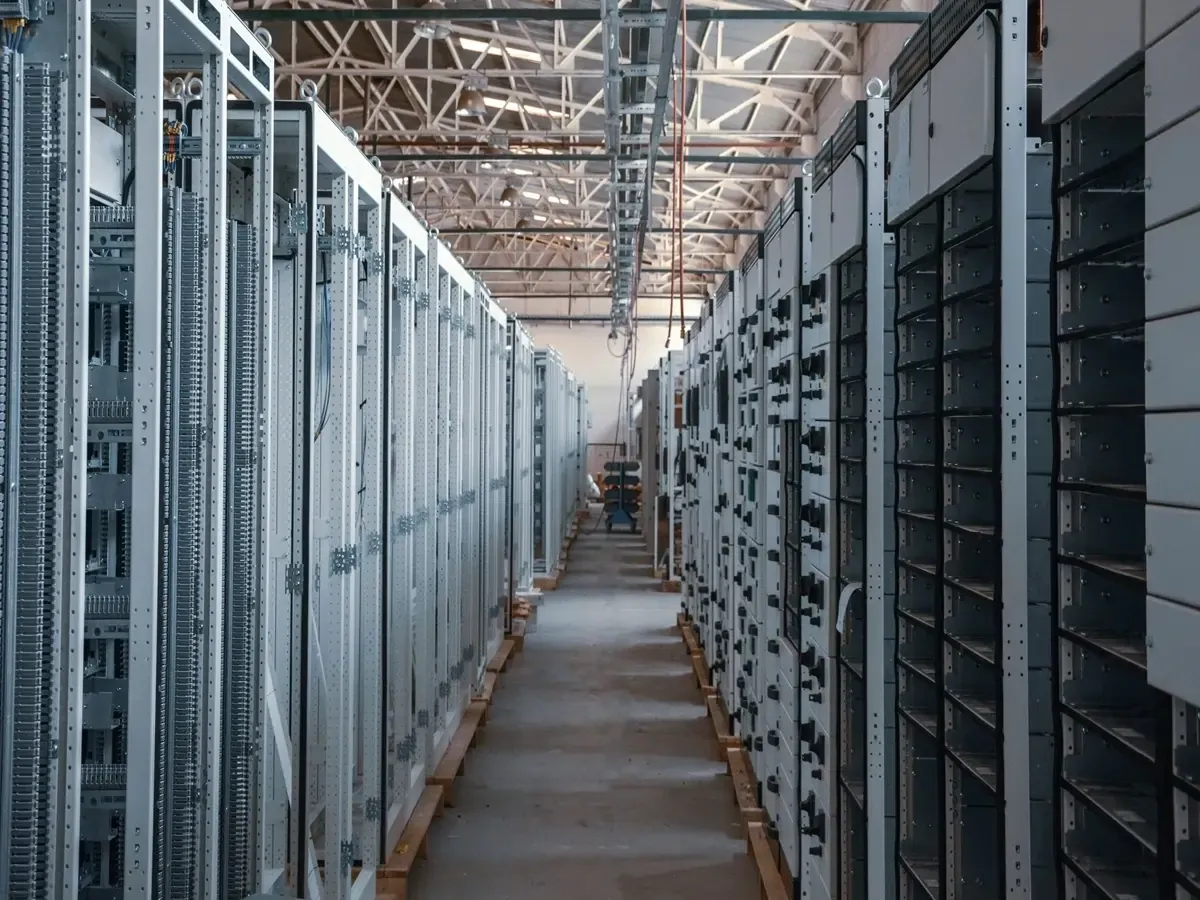
The government will offer a tax holiday till 2047 for foreign companies providing cloud services globally from data centres
To say that the markets were less than enthused by Budget 2026 would be an understatement. However, among a range of announcements made, one that stood out has been the focus on data centers.
This provided cheer to companies in the sector, with stocks like Anant Raj and E2E Networks (to name a few) responding positively. In fact, this has been one of the few spaces where share prices have spiked post-Budget 2026. The announcement signifies the government’s intent and focus to strengthen India’s AI ecosystem. An increase in data center capacity can not only position India as a global hub but also lead to employment generation.
The question now is: Are these the only companies that benefit from India’s growing AI focus or are there second- and third-order beneficiaries that investors can evaluate to leverage the growth of Indian AI.
For example, increasing car ownership not only benefits the auto makers but also ancillary players.
Similarly, let’s explore a few other industries that investors can explore to leverage this future trend.
Here are some of teh the major ones:
- Copper
- Electricity
- Cooling systems and water
- Digital infrastructure
- Real estate
Let's explore each one of these.
Copper
Data centers require up to 10x the electrical load, easily translating into a 5x-6x more copper requirement, as per market experts. Current projections suggest that copper demand from data centers could reach 330,000-420,000 tonnes annually by 2030, reaching over 2 million tonnes per annum by 2050.
Investors should, however, be aware that as a raw material, copper is not a huge cost (less than 5% as per some experts) for data centers. That said, demand is relatively inelastic, meaning copper prices could benefit from the rise in data centers.
Electricity
As per the International Energy Agency (IEA), data centers consume about 1.5% of global electricity supply, roughly the same amount as the U.K. The agency believes that, by 2030, demand will more than double, with AI responsible for much of the increase.
As per the Institute of Energy Economics and Financial Analysis, India’s data center capacity is expected to grow from 1.4 GW in 2025 to 9GW in 2030. This means that by 2030, data centers will consume about 3% of India’s electricity in 2030, up from less than 1% at present.
Food for thought: While we won't delve deep into this in this article, investors can dig deeper here. Given this high demand, what could be a cheaper, albeit more sustainable source of electricity: natural gas, coal, or hydrogen? And are there any opportunities here?
Cooling systems and water
This one won't really surprise you. As the need for electricity spikes, so will the need for cooling systems. As per experts, cooling currently accounts for nearly 40% of a data center’s total energy use. Conventional cooling systems might not be able to keep up with the requirements of data centers and AI chips. More advanced cooling systems will therefore become essential. With newer systems, companies will be expected to incur meaningful capex. Investors should therefore thoroughly examine the usage and returns on these funds before making any decisions.
In light of this, liquid cooling is one such technology that is being actively used and explored to provide the necessary cooling.
Did you know that a small 1 MW data center consumes about 26 million litres of water annually! To put this into perspective, this much water could quench the thirst of a mid-sized city for a day.
A report by Morgan Stanley suggests that, AI data centers willdrive annual water consumption for cooling and electricity generation to approximately 1,068 billion litres by 2028 (base case), an 11x increase from 2024 estimates.
This makes water, water management and water desalination some of the key areas for investors to focus on.
Digital Infrastructure
Think wires (for simplicity’s sake). AI clusters require up to 36x more fiber than traditional CPU-based racks to prevent networking bottlenecks. This spike is expected to benefit fiber and cable manufacturers, optical transport/networking companies and optical component companies (transceivers, for example).
Real estate
As per a Deloitte report, India could require an additional 45–50 million square feet of real estate space by 2030 to meet the growing demand for AI. Areas like Navi Mumbai, Chennai, Noida and Hyderabad are emerging as critical markets for this development. Besides this, Tier-II cities are also emerging as preferred locations due to their value proposition (more space, less cost).
Just like electricity, investors should also look at REITs, which might not be building this infrastructure, but are likely investors who could earn higher and more predictable rents from these investments.
In the table below, we have put together a list of about 10-15 companies for your consideration. As always, these are not recommendations, but a starting point for your investment journey. All our readers are strongly encouraged to do their own independent research.
| Company | Industry* | Market cap (₹ crore) | ROE (%) |
|---|---|---|---|
| Hindustan Copper | Copper | 57,841 | 23.8% |
| Vedanta | Copper | 2,55,640 | 38.5% |
| Hindalco Industries | Copper | 2,04,064 | 14.0% |
| Adani Energy | Electricity | 1,01,676 | 13.6% |
| Tata Power | Electricity | 1,13,070 | 11.0% |
| JSW Energy | Electricity | 77,528 | 7.4% |
| Torrent Power | Electricity | 65,387 | 19.0% |
| Rossari Biotech | Water | 2,952 | 12.2% |
| Prince Pipes | Water | 2,616 | 2.7% |
| VA Tech Wabag | Water | 6,664 | 14.6% |
| Triveni Engineering | Water | 7,771 | 8.1% |
| Voltas | Cooling systems | 42,817 | 13.5% |
| Amber Enterprises | Cooling systems | 21,056 | 11.3% |
| Blue Star | Cooling systems | 36,818 | 20.6% |
| Polycab India | Wires | 1,02,990 | 21.4% |
| KEI Industries | Wires | 37,362 | 15.6% |
| Finolex Cables | Wires | 11,103 | 12.4% |
| Anant Raj | Real Estate | 19,136 | 10.9% |
| Embassy Office Parks REIT | Real Estate | 41,707 | 7.1% |
Source: Screener; Data as of February, 1, 2026; * The industry classification above is in line with the sectors mentioned in the article above. The companies could be engaged in multiple business lines.
Before you go…
Data centers hold a definite promise and are poised to have a huge trickle-down impact as well. That said, this is still a sector that is finding its feet and is shaped by intense local and global competition. Cost is expected to be a key focus for all players.
While there is definite potential, the magnitude of work ahead means huge future capex spending. Investors are strongly urged to track this spend, and before taking any decision, understand and analyse the kind of returns companies make on this spend, the potential payback period for these monies. While this trend definitely deserves your attention, investors should not take their eyes off the risk that goes into it. In any established sector today, there are only a handful of players operating in any industry.
By signing up you agree to Upstox’s Terms & Conditions

About The Author
Next Story