Business News
India–US trade deal: Which sectors stand to benefit the most? Here's what we know so far
.png)
3 min read | Updated on February 03, 2026, 15:42 IST


SUMMARY
The India–US trade deal announced by US President Donald Trump is expected to provide relief to India’s labour-intensive export sectors, including garments, leather and non-leather footwear, gems and jewellery, carpets, handicrafts and marine products.
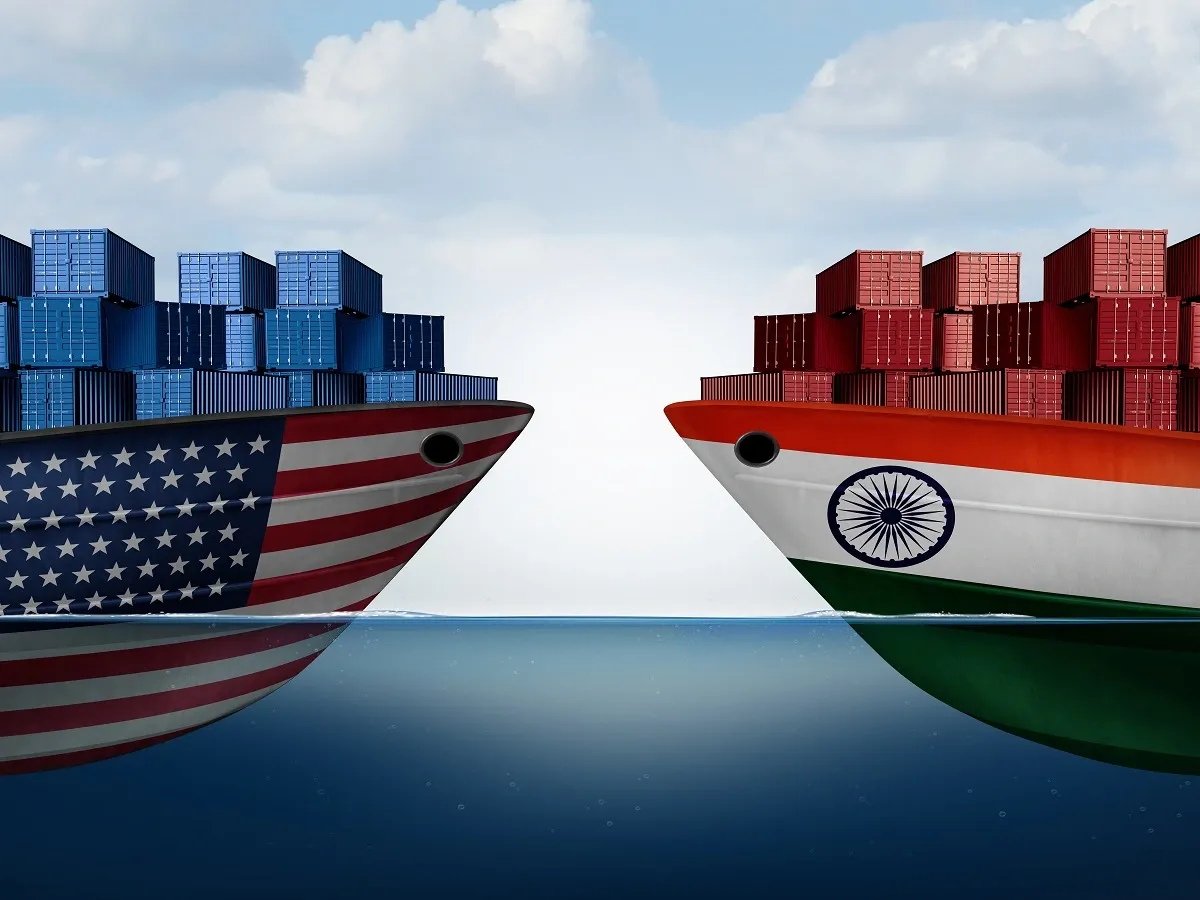
The US remained India’s largest trading partner for the fourth consecutive year in 2024-25, with bilateral trade valued at USD 131.84 billion, including exports worth USD 86.5 billion. | Image: Shutterstock
The India–US trade deal announced by US President Donald Trump is expected to benefit a wide range of labour-intensive sectors.
Garments, leather and non-leather footwear, gems and jewellery, carpets and handicrafts may get a boost as high tariffs were hurting exports of these labour-intensive goods to the US.
"India US trade deal to benefit all the sectors, we had a good amount of exports with the US like marine, textile, engineering," Moneycontrol quoted Anuradha Thakur, department of economic affairs secretary, as saying.
No details of the trade deal are available so far.
An executive order from the US may provide clarity on the tariff issues.
According to earlier estimates, exports worth about $48.2 billion from India are likely to face lower US tariffs of 18%.
India’s merchandise exports to the United States stood at $86.51 billion in the 2024–25 fiscal year.
Textile exports worth nearly $11 billion and gems and jewellery shipments of about $10 billion are expected to benefit from the tariff cuts.
Marine product exports valued at $2.7 billion, organic and inorganic chemicals worth $4.2 billion, and leather exports of close to $1 billion are also set to gain from lower duties.
Trump announced the trade deal after a phone call with Prime Minister Narendra Modi, saying New Delhi had agreed to stop buying Russian oil and increase purchases from the United States.
In a post on his Truth Social platform, Trump said the United States would reduce reciprocal tariffs on Indian imports from 25% to 18% with immediate effect, while India would move to eliminate tariffs and non-tariff barriers on US products.
Modi welcomed the tariff reduction in a post on social media platform X, saying cooperation between the world’s two largest democracies would unlock “immense opportunities for mutually beneficial cooperation.”
Top finance ministry officials asserted that the trade deal has ended the atmosphere of uncertainty and will have positive implications for the Indian economy amid global problems.
"Today Indian economy continues to demonstrate strong macroeconomic resilience. Despite a global environment which has uncertainties, a great deal of uncertainty dropped today morning...," Thakur said in her address to the industry chamber FICCI.
She further said India stands out as a macroeconomically strong country in the world today.
The government is further awaiting the details of the trade deal to gauge if India's economic growth will exceed the estimate of 6.8-7.2 per cent in 2026-27, she said.
Speaking at the event, Financial Services Secretary M Nagaraju said, "Today is a good day. One of the dark clouds of uncertainty from the world economy has been lifted, with both Prime Minister Narendra Modi and US President Trump reaching a trade deal."
He expressed confidence in India's economic momentum, but added that the banking sector's credit growth is not yet enough to meet the Viksit Bharat vision of 2047.
FII outflow
S Mahendra Dev, Chairman of Economic Advisory Council to the Prime Minister (EAC-PM), said the trade deal will boost FDI as well as portfolio investments in the country.
Dev said the trade deal announcement is a "huge one" for India in several ways as some of the labour-intensive manufacturing sectors, like textiles and gems and jewellery, will benefit.
Dev said the FDI and FII outflow will hopefully reverse, providing support to the domestic currency.
"So now with this announcement, I think the FDI as well as FII flows to the stock market, affected because of uncertainty regarding this deal, will hopefully increase. I think the impact on the rupee will also be positive," he said.
By signing up you agree to Upstox’s Terms & Conditions

About The Author
Next Story