Business News
From pharmaceutical sector to F&O segment: Top winners and losers of Budget 2026-27

7 min read | Updated on February 01, 2026, 19:59 IST


SUMMARY
From a ₹10,000 crore outlay for the pharmaceutical sector to hiking the STT rate on futures and options, here are some of the top gainers and losers for Budget FY27.
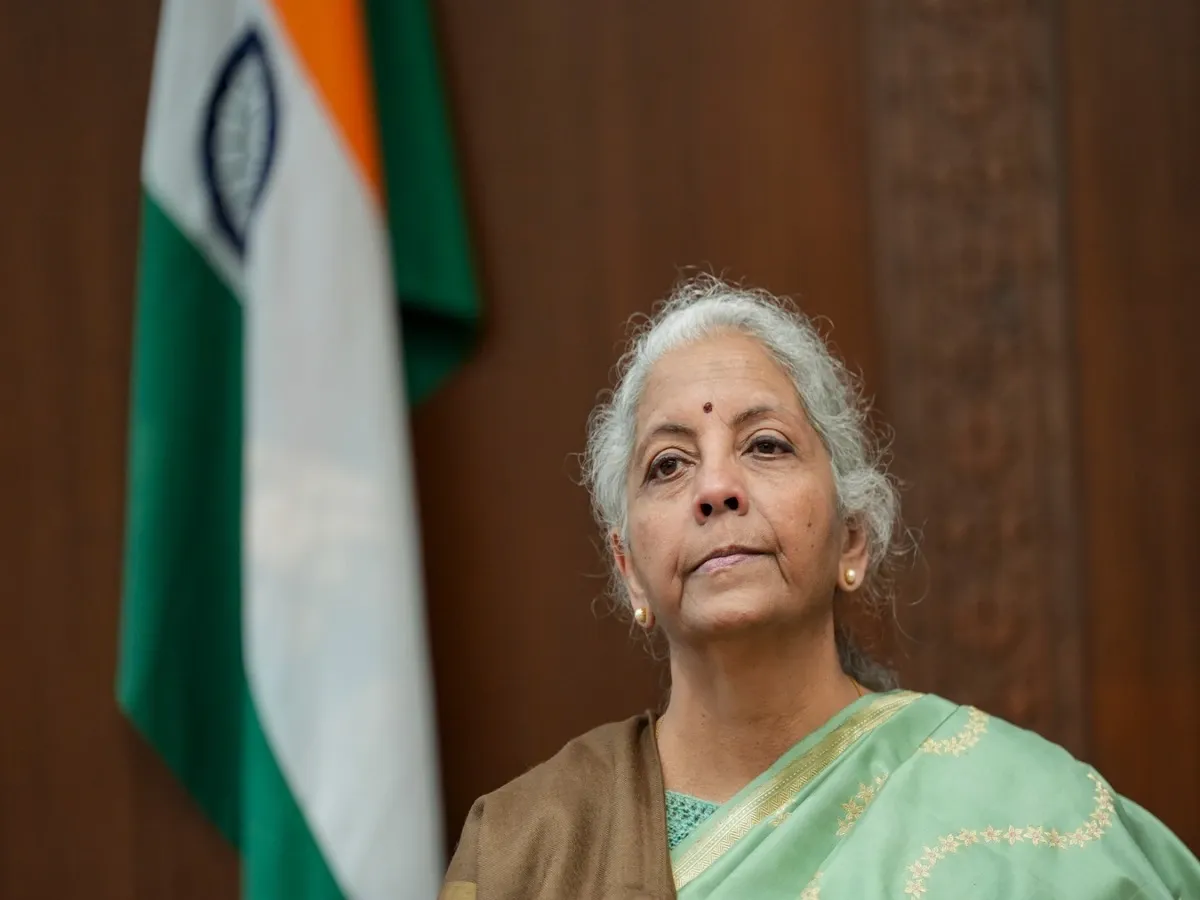
Top winners and losers of Budget FY27. | Image: PTI
In her budget speech, the Finance Minister noted that India faces an external environment in which trade and multilateralism are imperilled and access to resources and supply chains are disrupted. She added that new technologies are transforming production systems while sharply increasing demands on water, energy, and critical minerals.
“India will continue to take confident steps towards Viksit Bharat, balancing ambition with inclusion. As a growing economy with expanding trade and capital needs, India must also remain deeply integrated with global markets, exporting more and attracting stable long-term investment,” Sitharaman said.
From a ₹10,000 crore outlay for the pharmaceutical sector to hiking the STT rate on futures and options, here are some of the top gainers and losers for Budget FY27.
Top winners of Budget 2026-27
The pharmaceutical sector emerged as the clear top gainer of Budget 2026-27, as the Finance Minister Nirmala Sitharaman announced an outlay of ₹10,000 crore over the next five years for developing biologics and biosimilars.
The government also proposed upgrading AYUSH pharmacies and drug testing laboratories and expanding Ayurveda.
She stated that the government will upgrade the WHO Global Traditional Medicine Centre in Jamnagar, and proposed setting up three new All India Institutes of Ayurveda to expand capacity for education, research, and clinical practice in the sector.
The budget also proposed setting up a network of over 1,000 accredited Indian clinical trial sites.
The textile sector was one of the top gainers of this year’s budget as the Finance Minister proposed to set up mega textile parks in a challenge mode
The budget also proposed to launch the Mahatma Gandhi Gram Swaraj initiative to strengthen khadi, handloom, and handicrafts, which Sitharaman said would help in global market linkage and branding. “This will benefit our weavers, village industries, One District, One Product initiative, and rural youth,” she stated.
She laid out a comprehensive 5-point plan for India’s textile sector development, which included the National Fibre Scheme, man-made and new-age fibres, a textile expansion and employment scheme, the National Handloom and Handicrafts Programme, and the TEX-ECO initiative, alongside Samarth 2.0 for modernised skilling.
The Finance Minister proposed mandatory use of the Trade Receivables Discounting System (TReDS) by central public sector enterprises for procurement from micro, small, and medium enterprises (MSMEs) and a fresh capital infusion into the Self-Reliance India Fund.
The Finance Minister said that TReDS will be a transaction platform for all purchases from MSMEs by central public sector enterprises.
The budget proposed to “top up the Self Reliance India Fund with ₹4,000 crore in FY27” to provide equity support to MSMEs, and announced the creation of a ₹10,000-crore fund to develop “champion SMEs” as part of efforts to scale up manufacturing and competitiveness.
The government announced a seaplane Viability Gap Funding (VGF) scheme to provide operational support to the tourism sector and proposed setting up a National Institute of Hospitality by upgrading the existing National Council for Hotel Management and Catering Technology.
It proposed setting up a pilot scheme for upskilling 10,000 guides in 20 iconic tourist sites through a standardised, high-quality 12-week training course in hybrid mode, in collaboration with an Indian Institute of Management. Furthermore, it will also establish a National Destination Digital Knowledge Gridfor digitally documenting all places of significance.
The government will also develop ecologically sustainable mountain trails in Himachal Pradesh, Uttarakhand and Jammu and Kashmir. Additionally, it will set up turtle trails along key nesting sites in the coastal areas of Odisha, Karnataka and Kerala, and bird-watching trails in Andhra Pradesh and Tamil Nadu.
The Budget also proposed to develop 15 archeological sites, including Lothal, Dholavira, Rakhigarhi, Adichanallur, Sarnath, Hastinapur, and Leh Palace into “vibrant, experiential cultural destinations.” It added that excavated landscapes will be opened to the public.
To promote India as a medical tourism hub, the Finance Minister announced the launch of a Scheme to support States in establishing five Regional Medical Hubs, in partnership with the private sector. The hubs will have AYUSH centres, medical value tourism facilitation centres and infrastructure for diagnostics, post-care and rehabilitation.
Overseas tour programme packages, including expenses for travel or hotel stay or boarding, lodging, or any similar or related expenditure, saw a tax collected at source (TCS) reduction from 5% on amounts aggregating up to ₹10 lakh and 20% on amounts exceeding ₹10 lakh to 2%.
The government has proposed to increase the outlay for the telecom ministry to ₹73,990 crore, mainly due to a significant rise in capital infusion for state-run telecom firm BSNL.
The increased allocation is for various projects, including BharatNet, capital requirement of BSNL, including cost of spectrum, network rollout, and to meet internal requirements, according to a PTI report, which cited Telecom Minister Jyotiraditya Scindi as saying.
The budget proposed allowing Indian non-residents (NRIs) to invest in domestic stocks through the portfolio investment scheme (PIS), and announced increasing the investment limit for an Individual Persons Resident Outside India (PROI) under this scheme from 5% to 10%, with an overall investment limit for all individual PROIs to 24%, from the current 10%.
The government also proposed to deduct tax deducted at source (TDS) on the sale of immovable property by an NRI and deposited using the resident buyer’s PAN, eliminating the need for a separate TAN.
The FM announced providing an exemption from the Minimum Alternate Tax (MAT) to all NRIs who pay tax on a presumptive basis and proposed to provide an exemption to the global income (other than Indian-sourced income) to an expert visiting India and staying for a period of five years. The expert visiting India should have been a non-resident in the previous five years.
The government proposed a tax holiday for any foreign company that provides cloud services globally using data center services from India, which will be valid up to 2047.
“It will, however, need to provide services to Indian customers through an Indian reseller entity. I also propose to provide a safe harbor of 15% on cost in case the company providing data center services from India is a related entity. To harness the efficiency of just-in-time logistics for electronic manufacturing, I propose to provide a safe harbor to non-residents for component warehousing in a bonded warehouse at a profit margin,” Sitharaman said.
Losers of this year’s budget
Sitharaman announced major changes to the Securities Transaction Tax (STT), proposing a hike in STT for futures trade from 0.02% to 0.05% and raising the STT on options trade to 0.15%.
The stock market was trading in deep red after the announcement, with the SENSEX tanking as much as 2,827 points from the day's highest level to fall below the 80,000 mark, and the NIFTY50 index falling to an intraday low of 24,571 after hitting a high of 25,440 during the session.
The SENSEX dropped 1,547 points to settle at 80,723, and the NIFTY50 index plunged 495 points to close at 24,825. The markets witnessed their biggest one-day fall in six years on Budget Day.
The defence sector is not exactly a loser as the government increased its spending to ₹7.85 lakh crore for the financial year 2026-27 from the previous year's budget estimate of ₹6.81 lakh crore.
However, the NIFTY India Defence index dropped as much as 8.86% or 725 points to hit an intraday low of 7,458.65 on Sunday, in a knee-jerk reaction to the STT hike, along with really high expectations of a 25% growth in capital outlay for the sector.
The budget proposed that the consideration received by a shareholder on buy-back will be chargeable to tax under “capital gains”, instead of being treated as dividend income.
Furthermore, it proposed to provide a differential rate for promoters. The government announced that to “disincentivise misuse of tax arbitrage”, promoters, which are domestic companies, will pay an additional buyback tax, making the effective tax of 22% for corporate promoters. For non-corporate promoters, the effective tax will be increased to 30%.
By signing up you agree to Upstox’s Terms & Conditions

About The Author
Next Story