Business News
What’s dragging rupee to record lows: Trade deficit, US deal worries or FII exits? Govt answers
.png)
3 min read | Updated on December 16, 2025, 11:47 IST


SUMMARY
The rupee slipped to fresh record lows against the US dollar amid persistent foreign fund outflows and dollar demand, despite some moderation in the trade deficit.
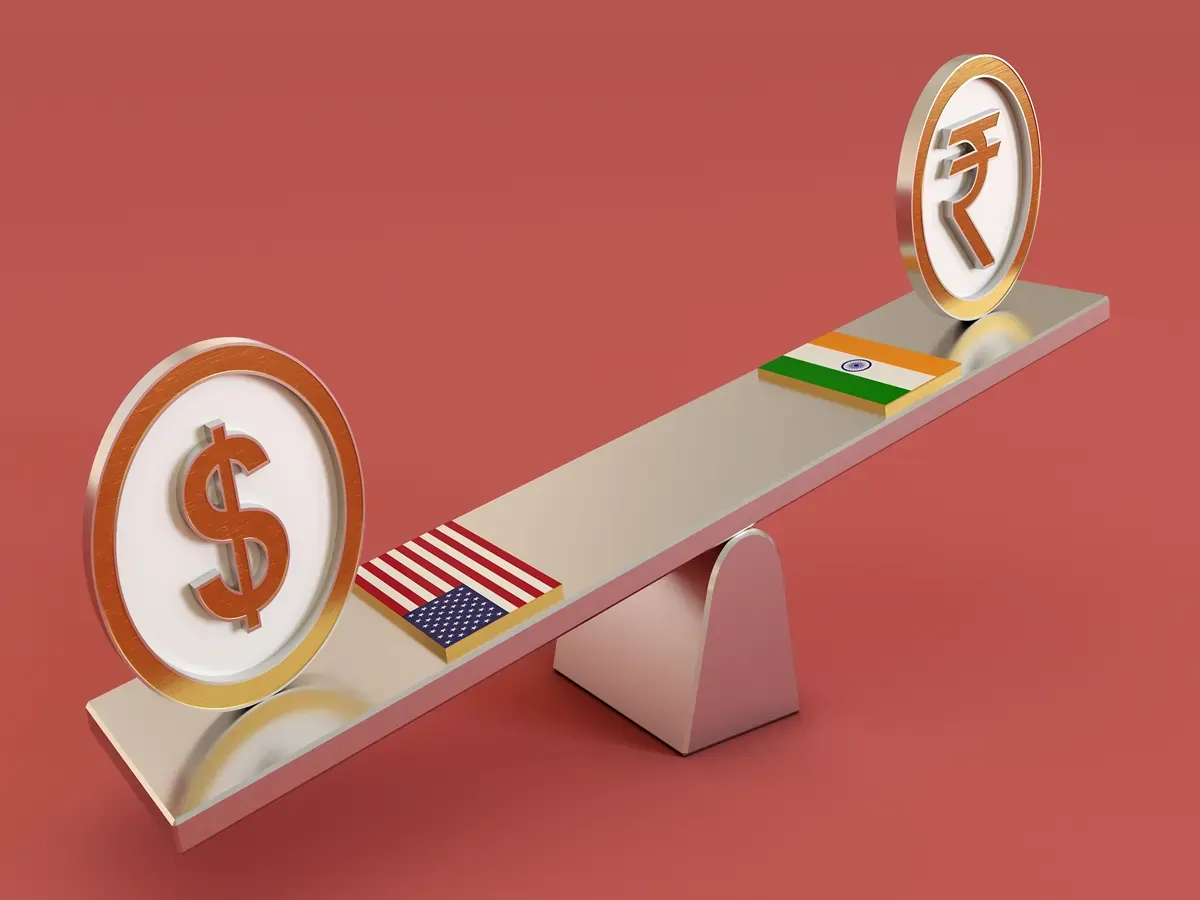
The government reiterated that the rupee’s value is market-determined and that it does not target any specific exchange rate.
The depreciation of the Indian rupee during the current financial year has been driven by a widening trade deficit, "prospects arising from the ongoing developments" in India’s trade agreement with the United States and relatively weak support from the capital account, the government informed Parliament on Monday.
In a written reply to the Lok Sabha, Minister of State for Finance Pankaj Chaudhary said various domestic and global factors influence the rupee’s exchange rate, including movements in the dollar index, capital flows, interest rates, crude oil prices and the current account deficit.
The rupee plunged 9 paise to a record low of 90.87 against the US dollar in early trade on Tuesday. At the interbank foreign exchange, the rupee opened at its all-time low of 90.87 against the US dollar, down 9 paise from its previous close, and traded in a narrow range of 90.77- 90.87 in early trade.
The rupee on Monday settled at a new all-time low of 90.78 against the US dollar, registering a loss of 29 paise over its previous close, weighed down by uncertainty over an India-US trade deal and persistent foreign fund outflows.
"The US-India trade deal still seems to be off by a distance with the Commerce Secretary saying the first phase will be signed before the end of the year and news that we are closest to the deal being signed. The uncertainty has clouded the recovery on the USD/INR pair as the rupee opened lower with dollar buying happening every day," Anil Kumar Bhansali, Head of Treasury and Executive Director, Finrex Treasury Advisors LLP, said.
Even a reduction in trade deficit on Monday could not bring about a recovery in the rupee with Foreign Institutional Investors (FII) outflows continuing.
The minister stressed that the value of the rupee is market-determined and the government does not target any specific exchange rate level or band.
The Reserve Bank of India (RBI) closely monitors the foreign exchange market and intervenes only to manage excessive volatility.
He said the RBI tracks global developments that may impact the rupee-dollar exchange rate, including monetary policy actions of major central banks, key global economic data releases, OPEC+ decisions, geopolitical developments and daily movements in G-10 and emerging market currencies.
Chaudhary listed several measures taken by the central bank in recent months to augment foreign exchange inflows. These include relaxing export credit norms by extending the maximum credit period to 450 days till March 31, 2026, easing timelines for merchanting trade transactions, allowing investment of surplus balances in Special Rupee Vostro Accounts in central government securities, and withdrawing certain investment limits for foreign portfolio investors in corporate debt.
The government said the central bank sold dollars on a net basis in most months between October 2024 and September 2025 to stabilise the rupee, with net sales peaking at over USD 20 billion in November 2024. Net purchases were recorded only in March and May 2025 during the period.
The minister said the rupee stood at ₹63.04 per US dollar on December 31, 2014, compared with ₹89.99 per dollar as on December 5, 2025.
Addressing concerns over the impact of depreciation, Chaudhary said a weaker currency can improve export competitiveness but may put upward pressure on the prices of imported goods. However, he added that India’s macroeconomic fundamentals remain strong, supported by robust domestic demand, moderating inflation, improved corporate balance sheets and sustained fiscal discipline.
By signing up you agree to Upstox’s Terms & Conditions

About The Author
Next Story