Business News
Economic Survey 2025-26: Agriculture sector faces climate, water challenges despite growth
.png)
4 min read | Updated on January 29, 2026, 14:22 IST


SUMMARY
The agriculture sector has registered an average annual growth rate of around 4.4% over the past five years at constant prices, with livestock and fisheries leading the gains. In the second quarter of fiscal year 2025-26, agriculture grew 3.5%.
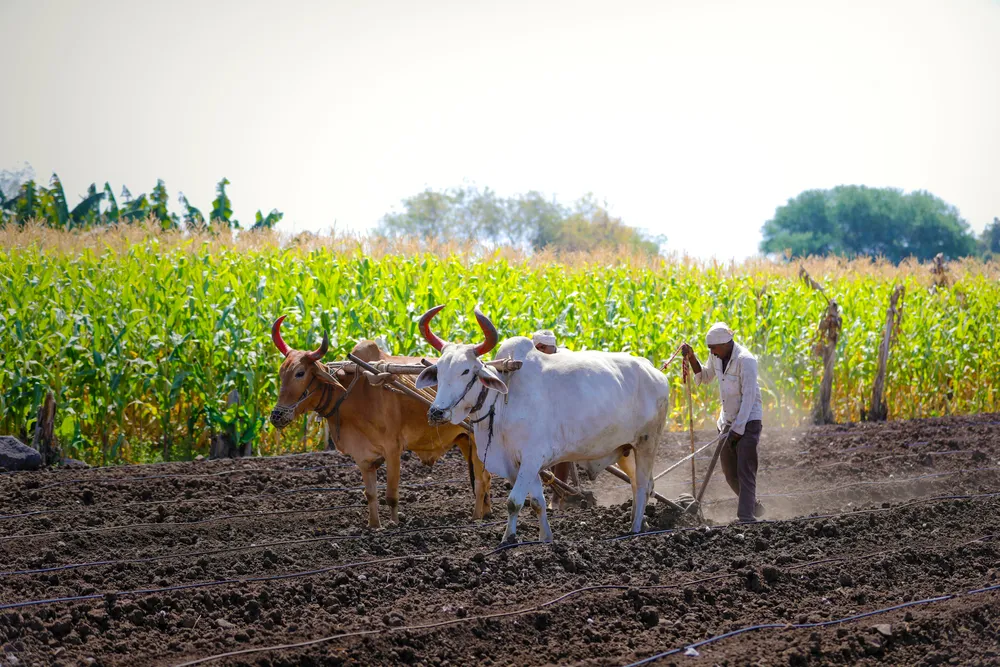
Agriculture and allied activities contribute nearly one-fifth of India's national income but account for 46.1% of the workforce. | Image: Shutterstock
The Union Finance Minister Nirmala Sitharaman tabled the Indian Economic Survey 2025-26 in Parliament on Thursday, January 29. The survey provides an overview of the Indian economy’s trends and challenges across multiple sectors.
India's agriculture sector, crucial to achieving the government's vision of a developed nation by 2047, faces significant sustainability and productivity challenges despite recent growth, the Economic Survey said.
The survey called for key reforms, including overhauling the fertiliser sector, boosting research and development, strengthening irrigation systems and promoting crop diversification.
Agriculture and allied activities contribute nearly one-fifth of India's national income but account for 46.1% of the workforce, making the sector central to the country's overall growth trajectory, the survey added.
The sector has registered an average annual growth rate of around 4.4% over the past five years at constant prices, with livestock and fisheries leading the gains. In the second quarter of fiscal year 2025-26, agriculture grew 3.5%.
"Agriculture will be central to achieving Viksit Bharat, driving inclusive growth and improving the livelihoods of millions," the survey tabled in Parliament said, referring to Prime Minister Narendra Modi's vision of a developed India.
However, climate change poses significant challenges, including erratic weather patterns, rising temperatures, and extreme events that affect crop yields, the survey warned. Water scarcity remains critical in regions dependent on monsoon rainfall.
Productivity gaps
While India's agricultural growth has exceeded the global average of 2.9%, yields across several crops, including cereals, maize, soybeans, and pulses, continue to lag global averages.
The gross irrigated area increased to 55.8% of the gross cropped area in 2022-23 from 41.7% in 2001-02, but significant disparities persist across states and crops, with irrigation coverage ranging from less than 15% for millets to about 67% for rice.
Fertiliser use remains inefficient, with the nitrogen-phosphorus-potassium ratio deteriorating in recent years largely due to price distortions favouring nitrogenous fertilisers, the survey stated.
The government strengthened cooperatives and farmer-producer organisations (FPOs) to expand access to credit and technology. Digital initiatives such as the Digital Agriculture Mission and the e-NAM platform, which connects farmers with markets, are increasing transparency.
India has made notable progress in dairy, poultry, fisheries, and horticulture production, which contribute significantly to GDP.
The survey said Indian agriculture is entering a phase of new opportunity, supported by advances in irrigation, digital extension, improved storage, and the strengthening of cooperatives and value chains.
"Yet, structural challenges such as small landholdings, climate risks, productivity gaps, and weak market integration continue to weigh on farm incomes," the survey said.
The survey said the way forward requires deepening reforms, promoting climate-resilient technologies, empowering FPOs, improving markets and logistics, and enhancing risk management.
Promoting climate-resilient agricultural practices, such as drip irrigation and sprinkler systems, as well as diversifying to a high-yield, appropriate crop mix of climate-resilient or drought-resistant crops, is critical for sustainability, the survey stated.
With sustained investment and innovation, agriculture can become more resilient, competitive, and income-enhancing, it said.
“Key priorities for the agriculture sector include strengthening access to assured water supply by strengthening irrigation systems that include reviving and rejuvenating water bodies and drip irrigation; enhancing agricultural research and development through coordinated public and private efforts to improve climate resilience, productivity, and farm incomes,” the survey said.
Strengthening private sector participation in food processing, cold chain logistics and high-value agricultural products will be crucial for competitiveness in domestic and export markets, it added.
Expanding high-growth sectors, such as horticulture, agroforestry, dairy, poultry, and fisheries, can further support inclusive economic development and job creation, particularly for rural communities, it said.
Despite recent gains, the dairy sector faces feed and fodder shortages, while the fisheries sector needs to expand value addition and processing capacity to reduce dependence on a narrow export basket, the survey added.
Related News


By signing up you agree to Upstox’s Terms & Conditions

About The Author
Next Story